Home / Lab Testing
Third-party testing
We send it to a lab. Then we show you.
Latest batch report
10 of 10 tests passed
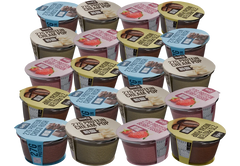
Sohi Protein Cup, 90g · Sample ref 26F 18336
| Test | Result | Permitted limit | Method | Status |
|---|---|---|---|---|
| Proteinper cup | 27g | 27g declared | Nutritional analysis | Pass |
| Total aerobic plate count33°C | <10 cfu/g | ≤10,000 cfu/g | AOAC 071203 | Pass |
| Staphylococcus, coagulase positive37°C | <10 cfu/g | <10 cfu/g | NordVal 049 ◆ | Pass |
| Salmonella41.5°C | Not detected per 25g | Not detected | SOL 37/04-12/18 ◆ | Pass |
| Total coliforms37°C | <10 cfu/g | ≤10 cfu/g | AOAC 050601 ◆ | Pass |
| Yeasts & moulds25°C | <10 cfu/g | ≤300 cfu/g | AOAC 040901 | Pass |
| E. coli44°C | <10 cfu/g | ≤10 cfu/g | AOAC 050601 ◆ | Pass |
| TOTOXtotal oxidation index | 6.36% | <10% | Total oxidation index | Pass |
| Peroxide valueprimary oxidation | 2.63 meq O₂/kg | <10 meq O₂/kg | Peroxide value (PV) | Pass |
| Anisidine valuesecondary oxidation | 1.1 pAnv | <5 pAnv | Anisidine value (AV) | Pass |
◆ Method covered by RBML's CYSAB accreditation. Microbiological limits are those set out in Lebanese Decision 469/1; the oxidation limits are the normal values stated on the report. The statement of conformity relates only to the items tested, on the sample as received by the laboratory.
What we tested for, and why
-
Protein
The number on the front of the pack, checked by the lab rather than calculated from the recipe: 27g of protein per cup, confirmed independently.
-
Total aerobic plate count
The broadest measure of overall microbial load — effectively, how clean the product is. A low count means the whole process, from ingredients to sealing, stayed sanitary.
-
Salmonella
One of the most serious foodborne pathogens. There is no acceptable level: the standard is complete absence in our sample.
-
E. coli & total coliforms
Indicator organisms. Their presence points to contamination somewhere in handling or water supply, so they are the standard early warning that something upstream has gone wrong.
-
Staphylococcus aureus
Usually introduced by human handling. The coagulase-positive strains are the ones that produce toxins, so this is the test that checks people, not just ingredients.
-
Yeasts & moulds
The spoilage organisms that decide whether a product survives its shelf life. Low counts here are what let a cup sit in a cupboard rather than a fridge.
-
Peroxide value
The first thing that happens when fat starts to go off, long before you could taste it. A low peroxide value means the fats in the cup are still fresh, not on their way to rancid.
-
Anisidine value
The second stage of that same process, once the early oxidation products have broken down further. This is the one that catches fat which was already tired before it ever reached the cup.
-
TOTOX
Peroxide and anisidine combined into a single index of total oxidation. It is the number the fats industry uses to judge freshness overall — and at 6.36% against a limit of 10%, ours sits comfortably inside it.
How this works
We do not run these tests ourselves, and we do not choose the numbers. Samples go to RBML Food Labs, an independent laboratory in Chouaifat accredited to ISO/IEC 17025:2017 — the international standard for testing competence — under certificate L042-4. The results come back as they come back.
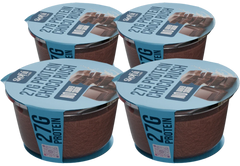
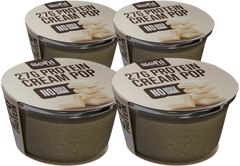
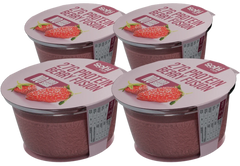
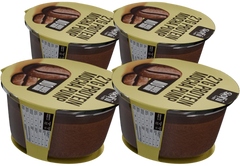
All four flavours are produced on the same line, under the same process, and the report speaks for all of them.
Testing is not a one-time exercise. Each production batch is submitted for testing for verification of purity, safety, and label accuracy.
Questions about any of this?
If you want to see a certificate, ask about a specific batch, or you're just curious what a test actually involves — message us. We'd rather answer than have you guess.
Ask us on WhatsApp